
PARTS
Pod Parts (18)
View Sub-Category
Replacement Glass (19)
View Sub-CategoryPARTS
Choosing a beginner vape kit
Vape Starter Kits, in Minnesota and Beyond
The best eCig, Box Mods and Vape Starter kits are just around the corner, or a short ship time away. If you are looking to purchase the best beginner vape kit for your dollar.Things often included in beginner vape kits, you might want to watch for.
- Battery, or multiple batteries.
- Clearomizer tanks
- Replacement Coils
- USB Charging Cable
- AC Power Adapter
- Free bottle of juice, or multiple
- Blunt Needle tips
The key is to find the right balance between value and price.
Of course you don't want to skimp, and have to re-buy a kit, but you do always have the opportunity to buy a more premium kit if you find you've graduated from past vape set-up. Things to think about as you choose, are whether the system will work other systems. - Some threading is specific to the brand and won't work with other devices, when you're looking at reviews check the source and make sure to weigh several reviews against each other and make an educated decision. Thanks for making Ecig Market your choice for Beginner Vape Kits in Brooklyn Center, Minnesota.What Is Vapor Vaping and How Does It Work?
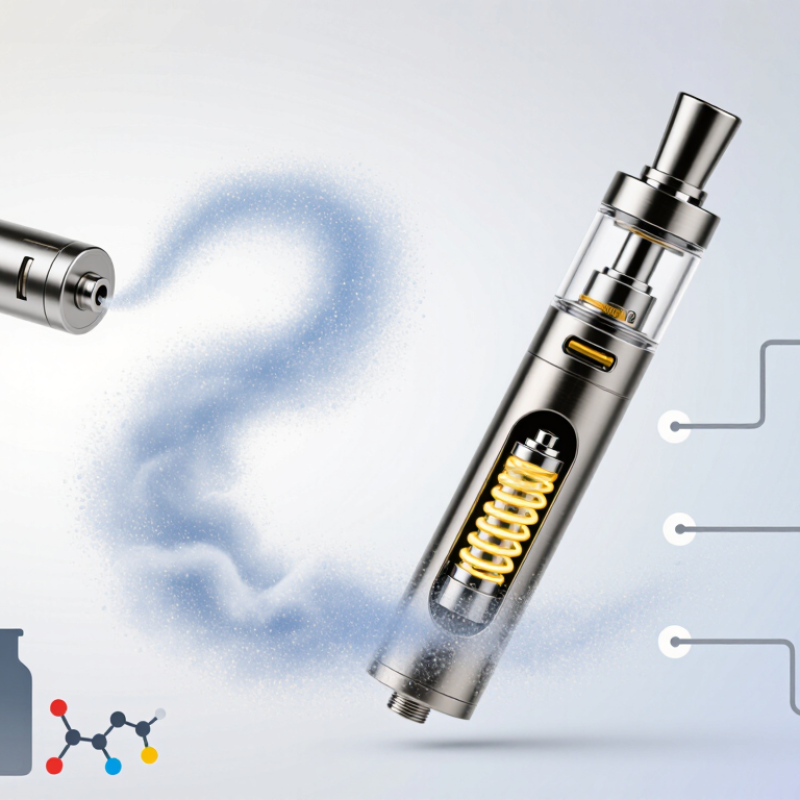
Vapor vaping describes the use of a battery-powered device that heats a liquid and produces an aerosol for inhalation. The word “vapor” is common, though the visible cloud is technically an aerosol: tiny droplets and particles suspended in air. That distinction matters. It helps explain why the cloud can carry substances from the liquid and why it should not be treated as harmless water vapor.
A typical device contains a battery, a heating element, and a reservoir or pod. When activated, the element warms the liquid; airflow then carries the resulting aerosol through the mouthpiece. Liquids vary, and some contain nicotine, flavorings, or other ingredients. Device design, power, and user behavior can also affect what is produced. Small details matter, such as a burnt taste or a leaking pod. They may signal a problem, not a reason to keep using the device.
Dr. Colin Mendelsohn, a tobacco-treatment specialist who has written about vaping, is often quoted as saying, “Vaping is not risk-free, but it is much less harmful than smoking.” The comparison is not a guarantee of safety, and it should not be read as a recommendation for people who do not smoke. Evidence continues to develop, while product quality and individual health vary. The terminology is imperfect, too. A clear explanation should separate how a device works from what its aerosol may do, and acknowledge what remains uncertain.
What Is Vapor Vaping?
“Vapor vaping” is an informal name for using an electronic device that heats a liquid and produces an inhaled aerosol. The liquid, often called e-liquid, may contain nicotine, flavorings, and other ingredients. Its contents vary. The word “vapor” can be misleading: the cloud is not simply water vapor.
Inside a typical device, a battery powers a small heating element. Liquid moves through a wick to the heated coil, then forms droplets that travel through the mouthpiece. You can picture a faint mist in a beam of light. Not just steam. The National Academies of Sciences, Engineering, and Medicine reported in its 2018 review that e-cigarette aerosol can contain potentially harmful substances, including metals and volatile organic compounds. The exact mix depends on the liquid and device, so one description cannot cover every puff.
Use is also tracked in public-health reports. The CDC’s 2024 National Youth Tobacco Survey estimated that 1.63 million U.S. middle and high school students, or 5.9%, currently used e-cigarettes. That figure describes reported use, not what every user inhaled. A small but important distinction. I find the everyday word “vapor” neat and convenient, yet it can hide the aerosol’s more complicated chemistry.
The Main Components of a Vapor Vaping Device
A vapor vaping device typically contains a battery, control circuitry, a liquid reservoir, a wick, a heating element, and a mouthpiece. The battery supplies power, while the circuitry regulates when the heater activates. Liquid moves through the wick toward the heated coil, producing an aerosol that travels through the mouthpiece. Small parts matter. A worn coil or damaged reservoir can change how a device performs, so appearance alone cannot confirm its condition.
The National Academies’ 2018 report reviewed more than 800 scientific studies on e-cigarettes. It describes how device design and operating conditions can affect aerosol composition, including the amount of some metals and chemicals released. The reservoir holds liquid, but its contents and the device’s temperature both influence what reaches the user. That relationship is not always obvious. A familiar-looking device can produce different emissions under different conditions, and laboratory findings do not predict every person’s exposure. The report is a useful technical reference, not a guarantee that any device is risk-free.
How the Device Heats E-Liquid
Inside a vaping device, a small battery supplies power to a metal heating coil. A wick draws e-liquid toward the coil, much like a narrow strip of cloth soaking up a spill. When the device is activated, the coil warms the liquid held in the wick and creates an inhalable aerosol. Not merely water vapor. The aerosol can contain tiny droplets and substances from both the liquid and the heating process.
Some devices begin heating when a person inhales; others use a button. Air moves through the device and carries the aerosol toward the mouthpiece, where it cools slightly. The liquid’s ingredients, the coil, and the device’s power can all affect the amount and feel of the aerosol. More heat is not automatically better. If liquid reaches the coil too slowly, the wick may overheat and produce a harsh, burnt taste.
Coil design, airflow, battery output, and liquid thickness make the heating process vary between devices. A basic explanation can miss that variability. Heating may also change some ingredients, and the resulting aerosol depends on conditions such as coil temperature and wear. Vaping aerosol is not risk-free, even when the device works as intended. The mechanism is compact, but its effects are not always obvious.
What Is Vapor Vaping and How Does It Work? - How the Device Heats E-Liquid
| Device Part or Stage | What It Does | How It Relates to E-Liquid |
|---|---|---|
| Battery | Supplies electrical power to the device. | When the device is activated, power is delivered to the heating element. Battery capacity and power output vary by device. |
| Activation control | Starts the heating process, commonly through a button or an airflow-activated sensor. | Activation allows current to flow to the coil; the exact control method depends on the device design. |
| E-liquid reservoir | Stores the liquid, often in a cartridge, pod, or tank. | E-liquids commonly contain propylene glycol (PG), vegetable glycerin (VG), and flavorings; some also contain nicotine. Ingredients vary. |
| Wick | Draws e-liquid from the reservoir toward the heating element. | The wick keeps the coil supplied with liquid during use. If it is not adequately saturated, the device may produce a harsh or burnt taste. |
| Heating coil | Converts electrical energy into heat when current passes through it. | The heat turns some of the nearby e-liquid into an inhalable aerosol. The coil does not simply boil all the liquid in the reservoir. |
| Airflow path and mouthpiece | Direct air through the device and carry aerosol to the mouthpiece. | Drawing on the mouthpiece moves air across the heated area and transports the aerosol out of the device. |
| Aerosol formation | Produces a mixture of small liquid droplets and other substances that can be inhaled. | The visible cloud is an aerosol, not merely water vapor. Its composition can include e-liquid ingredients and substances formed during heating. |
| Overall process | Combines power, liquid delivery, heating, and airflow. | In simplified terms: activation powers the coil, the wick supplies e-liquid, heat forms aerosol, and airflow carries it through the mouthpiece. |
Note: Device designs and e-liquid formulations differ. E-cigarette aerosol is not harmless water vapor, and nicotine is addictive.
How Heated E-Liquid Becomes an Inhalable Aerosol
Vapor vaping is often described as “making vapor,” but the visible cloud is an aerosol: tiny liquid droplets suspended in air. A battery heats a coil, which warms e-liquid drawn through a wick. The warmed liquid forms droplets that travel through the mouthpiece. You can picture a faint cloud leaving the device, not a pot of liquid boiling. One small but important distinction.
The National Academies’ 2018 report, Public Health Consequences of E-Cigarettes, describes aerosol particles as generally smaller than one micrometer, while noting that emissions vary with device settings and use. The aerosol can contain nicotine, flavoring chemicals, and metals released from heating components. Its contents are not simply the original liquid: heat can change chemicals, and puff duration or airflow can alter what is produced. A dry wick may also create a harsher taste. The word “vapor” can make the process sound cleaner than it is. That wording deserves scrutiny. Device-to-device variation also makes one neat description imperfect; laboratory findings do not predict every puff.
Factors That Affect Aerosol Production and Delivery
A vaping device heats liquid at a coil, forming an aerosol that is inhaled. That aerosol is not simply water vapor; it can contain tiny particles and substances from the liquid and heated components. Output varies. Even the same device may produce different amounts as its parts warm or age.
Aerosol production depends on several interacting factors. Higher power can heat the coil more intensely, while airflow affects how heat and aerosol move through the device. Liquid thickness and composition also matter, as do coil design and condition. A worn or residue-coated coil may heat unevenly. Small changes matter. Still, more visible aerosol does not reliably indicate a specific dose or composition.
Delivery varies with puff length, inhalation depth, and pauses between puffs. A long draw may feel different from a short one, but individual technique is difficult to measure consistently. Room temperature and ventilation can change how quickly aerosol disperses; a cloud that lingers near a window may look substantial without showing what a person absorbed. Not always. These factors make simple comparisons unreliable, and aerosol exposure can include irritating substances even when the cloud appears light.
What the chart shows: Within a device’s operating limits, increasing power or puff duration generally increases aerosol mass per puff. Increasing e-liquid nicotine concentration generally increases the nicotine available for delivery, though actual delivery also depends on the device and puffing behavior. Airflow and VG proportion can affect aerosol output, but their effects vary with the device and liquid. Scores show direction only—not measured effect size.
Related Posts
-
How to Choose the Best Cig Shop for Your Smoking Needs?
-
Why Choose the Best Vapor Products for Global Buyers?
-
Top 10 Vapor Market Types Global Buyers Need to Know
-
Top Vaping Hardware Options for Every Enthusiast in 2026?
-

Top 10 Best Liquids to Buy in an Online Shop for Your Needs?
-

What is the Vapor Market Trends Products and Consumer Insights