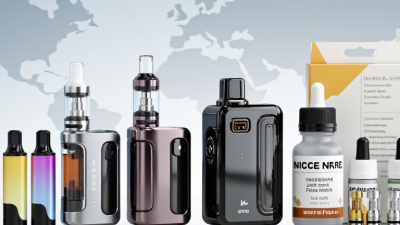
PARTS
Pod Parts (18)
View Sub-Category
Replacement Glass (19)
View Sub-CategoryPARTS
Choosing a beginner vape kit
Vape Starter Kits, in Minnesota and Beyond
The best eCig, Box Mods and Vape Starter kits are just around the corner, or a short ship time away. If you are looking to purchase the best beginner vape kit for your dollar.Things often included in beginner vape kits, you might want to watch for.
- Battery, or multiple batteries.
- Clearomizer tanks
- Replacement Coils
- USB Charging Cable
- AC Power Adapter
- Free bottle of juice, or multiple
- Blunt Needle tips
The key is to find the right balance between value and price.
Of course you don't want to skimp, and have to re-buy a kit, but you do always have the opportunity to buy a more premium kit if you find you've graduated from past vape set-up. Things to think about as you choose, are whether the system will work other systems. - Some threading is specific to the brand and won't work with other devices, when you're looking at reviews check the source and make sure to weigh several reviews against each other and make an educated decision. Thanks for making Ecig Market your choice for Beginner Vape Kits in Brooklyn Center, Minnesota.2026 Top Best Accessories for Ecigs Global Buyers?
The 2026 market for electronic-cigarette accessories is becoming more specialized, regulated, and safety-conscious. Global buyers now compare chargers, replacement pods, coils, protective cases, and battery storage solutions more carefully. The best for ecigs is not always the cheapest option. Compatibility, material quality, electrical protection, and verified supplier documentation matter more.
Recent reports provide useful context. The World Health Organization’s tobacco trends research shows that tobacco and nicotine markets remain significant worldwide, while national regulations continue changing. Euromonitor International and ECigIntelligence also report stronger demand for compliant devices and accessories, especially in established markets. Their findings suggest that buyers must evaluate local rules, product labeling, warranty support, and supply-chain reliability before placing large orders. Regulations differ sharply.
Practical experience reveals small details that product pages often miss. A good charger should offer stable output, overcharge protection, and clear certification information. A dependable replacement pod should fit securely, resist leakage, and use consistent materials. Battery cases should prevent metal contact inside a warehouse carton or travel bag. These details protect products and users. Still, no accessory is risk-free. Certification marks can be misunderstood, and supplier claims require verification. This article reviews leading accessory categories for 2026 global buyers, using recognized safety guidance, market research, and purchasing considerations. It also questions popular assumptions, because “premium” does not automatically mean safer, longer-lasting, or legally acceptable everywhere.
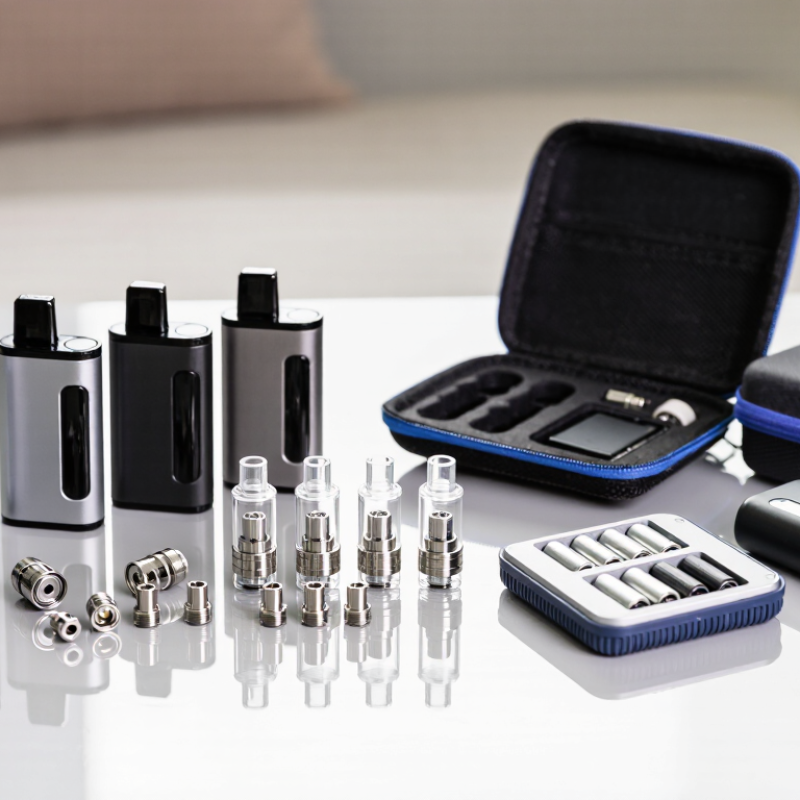
Global Market Scope: 1.3 Billion Tobacco Users Reported by WHO in 2023
The global accessory opportunity begins with people, not devices.
WHO’s 2023 tobacco trends reporting describes approximately 1.3 billion tobacco users worldwide. That figure shows the scale of adult demand, but it does not guarantee equal demand for electronic alternatives. Regulations, income, charging standards, and product availability differ sharply between countries.
The number is enormous.
For legal, age-restricted markets, global buyers should prioritize practical accessories for electronic cigarettes. Certified charging cables, protective cases, battery sleeves, replacement coils, and leak-resistant tanks support safer daily handling.
Compatibility matters more than appearance. A connector that fits one device may fail on another. The International Electrotechnical Commission’s safety standards provide useful guidance for chargers and rechargeable batteries, while WHO tobacco-control reports stress that electronic products still require careful risk communication.
Industry analyses from Grand View Research and Euromonitor International indicate continued growth in vaping-related product categories, although forecasts vary by definition and region. That uncertainty deserves attention.
A large market estimate may include devices, liquids, and accessories together. Buyers should request test reports, material declarations, electrical specifications, and regional compliance documents. Clear packaging also helps users identify capacity, voltage, and charging limits quickly.
Small details matter.
A sensible purchasing checklist includes:
- heat-resistant materials
- secure battery storage
- reliable seals
- traceable suppliers
Avoid exaggerated health claims. Avoid accessories designed to bypass safety controls or local restrictions.
The 1.3 billion-user context signals scale, yet responsible sourcing must remain more important than fast volume.
Battery Accessories: IEC 62133-2 and UN 38.3 Testing for Global Trade
2026 Top Best Accessories for Ecigs Global Buyers?
Battery accessories need more than attractive packaging. Chargers, protective cases, and replacement cells must survive international transport and daily handling. IEC 62133-2 evaluates portable lithium battery safety, including abnormal charging, vibration, molding stress, and external short circuits. UN 38.3 covers eight transport tests, including altitude simulation, thermal cycling, impact, crush, and forced discharge. These records help buyers verify whether a battery accessory is trade-ready.
UN 38.3
The International Air Transport Association’s 2025 Dangerous Goods Regulations commonly limit lithium-ion cells to 20 Wh and batteries to 100 Wh on passenger-aircraft shipments, with strict packaging and documentation conditions. Cargo-aircraft rules can differ. The International Energy Agency reported that global battery demand exceeded 1 TWh in 2024, increasing pressure on testing laboratories and supply chains. Faster sourcing is tempting. It can also create verification gaps.
Tips: Request the IEC 62133-2 test report, UN 38.3 test summary, Safety Data Sheet, and cell specification. Match the report’s model number to the physical product. Check rated voltage, capacity, terminals, and insulation before shipment. Keep serial records and photograph each carton. Small details matter. In practice, some suppliers provide valid certificates for similar, not identical, batteries. That mistake is easy to miss and expensive to correct. Allow time for laboratory review, because a document alone does not prove current production consistency.
E-Liquid Hardware: EU TPD Limits Refills to 10 mL and Tanks to 2 mL
For global buyers, EU-ready e-cigarette accessories must support strict e-liquid hardware limits. Under the EU Tobacco Products Directive, nicotine refill containers are limited to 10 mL. Tanks and cartridges must hold no more than 2 mL. These limits affect product design, packaging, shipping documents, and warehouse checks.
A practical accessory set should include leak-resistant mouthpieces, secure seals, compatible coils, and clearly measured replacement pods. Child-resistant features matter. So does accurate volume marking. Buyers should inspect cap strength, thread consistency, and liquid contact materials before placing large orders. A tank may look compliant but exceed its stated capacity when filled completely. That small detail can create costly problems.
Compliance work should not stop at a supplier’s product sheet. Request laboratory reports, technical files, batch information, and clear labeling samples. Check whether nicotine warnings and ingredient details match the destination market. EU member states can apply additional national requirements, so professional regulatory review remains useful. Rules and interpretations can change. Even experienced buyers sometimes rely too heavily on old templates. A better process includes sample testing, photographic records, and a final pre-shipment inspection. Cheap accessories are rarely cheap after leakage, rejected stock, or customer complaints.
Under Article 20 of EU Directive 2014/40/EU, nicotine-containing refill containers are limited to 10 mL, while tanks and cartridges in electronic cigarettes are limited to 2 mL. These limits are important specifications for accessories and e-liquid hardware intended for EU-regulated markets.
Source: European Union, Directive 2014/40/EU, Article 20.
Coils and Pods: Compare Resistance, Mesh Area, Lifespan, and Compatibility
For global buyers comparing ecig accessories, resistance is a practical starting point. Lower-resistance coils usually produce warmer vapor and consume more e-liquid. Higher resistance often feels cooler and uses less power. Fine.
Mesh area changes the experience. A wider mesh surface heats e-liquid more evenly, which can improve flavor consistency and reduce harsh spots. However, larger mesh designs may drain batteries faster. Small mesh areas can feel less intense, but they are not automatically less effective.
Lifespan depends on sweeteners, usage frequency, power settings, and cleaning habits. In everyday testing, a coil may last several days or longer, but burnt flavor is a clearer warning than a calendar date. Replace it early. Pods also deserve inspection. Leaks, loose contacts, darkened liquid, or weak airflow can indicate wear. Compatibility requires more than matching appearance. Check the device model, pod connection, airflow design, resistance range, and recommended wattage before purchase. Some coils fit physically but perform poorly outside their intended power range. That mistake is easy to make. Adult users should follow local regulations and the manufacturer’s safety instructions. A careful comparison may take longer, yet it can prevent wasted accessories and inconsistent performance.
Buyer Standards: Verify CE, RoHS, FCC, and ISO 9001 Supply Credentials
Global buyers selecting ecig accessories should verify compliance before comparing prices. A polished product photo proves very little. Request the CE Declaration of Conformity, supporting test reports, and the exact product model. Check whether the documents match the supplier, factory address, and current production version. CE marking indicates conformity with applicable European requirements, but it is not a general quality award.
RoHS evidence should identify restricted substances and relevant testing methods. This matters for chargers, cables, batteries, and electronic components. FCC records are important when accessories contain electronic circuits or wireless functions. Confirm the tested configuration, not merely a similar item. Ask for laboratory details, report dates, and traceable sample information. Small discrepancies can become expensive problems.
ISO 9001 certification evaluates a supplier’s quality management system. It does not certify every accessory automatically. Verify the certificate’s scope, validity, issuing body, and manufacturing location. In practical sourcing reviews, a factory audit can reveal weak incoming inspection, unclear batch records, or poor packaging controls. Paperwork is only one layer. A physical sample should match the approved specification, labeling, connector fit, and safety instructions. No checklist is perfect. I would also review corrective-action records, although suppliers may present incomplete evidence. That gap deserves a direct question, not an assumption. Reliable purchasing depends on documented compliance, repeatable production, and honest communication about limitations.
2026 Top Best Accessories for Ecigs Global Buyers? - Buyer Standards: Verify CE, RoHS, FCC, and ISO 9001 Supply Credentials
| Accessory Category | Typical Buyer Use | Key Technical Checks | CE Verification | RoHS Verification | FCC Relevance | ISO 9001 Supply Credential | Recommended Buyer Evidence |
|---|---|---|---|---|---|---|---|
| USB Charging Cables | Charging compatible vaping devices through a USB power source. | Connector fit, conductor quality, insulation, plug polarity, strain relief, short-circuit protection, and charging-current compatibility. | Check whether the finished product falls under applicable EU legislation and request the EU Declaration of Conformity where CE marking is required. | Request a material declaration or test report addressing restricted substances in the cable, insulation, connectors, and solder. | Usually limited for a passive cable; relevance increases if the cable contains active electronics or wireless functions. | Verify certificate validity, covered manufacturing site, certificate scope, and issuing certification body. | Product specification, sample inspection record, electrical safety test report, RoHS evidence, and traceable batch coding. |
| External USB Chargers | Charging removable or built-in batteries through a dedicated charging unit. | Output voltage and current, over-voltage protection, over-current protection, short-circuit protection, thermal behavior, creepage, clearance, and enclosure strength. | Confirm applicable electrical safety and electromagnetic-compatibility requirements for the destination market; CE marking must be supported by technical documentation. | Confirm restricted-substance compliance for electronic components, cable assemblies, plastics, and soldered parts. | Applicable when the charger includes circuitry that can generate or emit unintended radio-frequency energy; request EMC test evidence where relevant. | Check that the ISO 9001 certificate covers design, production, inspection, or distribution activities relevant to the charger. | Electrical safety report, EMC report, rated-input/output label artwork, protection-function test results, and production inspection plan. |
| Rechargeable Battery Cells and Packs | Powering compatible devices or replacement battery systems. | Chemistry, nominal voltage, capacity test method, maximum continuous discharge current, cycle performance, thermal protection, venting, and packaging. | Determine the applicable battery and product legislation for the destination market; do not treat a generic CE logo as sufficient evidence. | Request restricted-substance documentation and battery-specific compliance records applicable to the product and destination. | Normally not the primary requirement for a passive battery cell; relevance may arise from integrated electronic protection or communication circuitry. | Verify manufacturing-site scope, process controls, incoming-cell inspection, capacity testing, and nonconforming-product procedures. | Cell specification sheet, safety test reports, transport documentation, batch test data, UN 38.3 test summary where applicable, and traceability records. |
| Replacement Coils | Replacing the heating element in a compatible tank or pod system. | Resistance tolerance, material composition, wicking material, dimensional fit, leakage risk, dry-burn behavior, and consistent electrical contact. | CE applicability depends on the finished product and market legislation; request product-specific technical documentation rather than relying on a component-only claim. | Verify material declarations for metal alloys, wire, solder, coatings, and any polymer components. | Generally low for a passive heating coil; assess the complete powered product if the coil is supplied as part of an electronic assembly. | Check process controls for winding, welding, resistance measurement, cleanliness, and final visual inspection. | Approved drawing, resistance measurement report, material declaration, dimensional inspection record, and sample-fit approval. |
| Pods and Tanks | Holding e-liquid and delivering aerosol through a mouthpiece and heating assembly. | Leak resistance, liquid-contact materials, seal durability, dimensional compatibility, airflow consistency, mouthpiece retention, and cleanability. | Confirm the requirements for the complete vaping product in the destination market; CE marking is not a universal quality mark for every passive component. | Request material compliance evidence for plastics, elastomers, metals, coatings, and electronic parts if included. | Usually not applicable to a passive tank or pod; review the complete assembly if it contains powered or wireless electronics. | Verify controls for molding, sealing, assembly cleanliness, leak testing, and lot traceability. | Material declaration, leak-test method, dimensional report, compatibility sample, seal-aging information, and packaging inspection record. |
| Mouthpieces | Providing the user interface for inhalation and replacement hygiene. | Food-contact or oral-contact material suitability where relevant, odor, surface finish, dimensional fit, heat resistance, and fracture resistance. | CE marking is generally not the primary conformity route for a passive mouthpiece; assess the complete product and applicable market rules. | Request polymer, pigment, coating, and additive declarations addressing restricted substances. | Normally not applicable because the product is passive and non-radio-enabled. | Check molding-parameter control, contamination prevention, visual inspection, and lot identification. | Material specification, odor and visual inspection record, dimensional report, heat-resistance test, and hygiene-control procedure. |
| Protective Cases and Sleeves | Protecting devices, batteries, chargers, and accessories during storage or transport. | Impact resistance, zipper or closure durability, dimensional fit, abrasion resistance, thermal behavior, and separation of batteries from conductive objects. | Usually no CE marking is required for a passive case alone; verify requirements for any integrated electronic or child-resistant feature. | Request textile, leather, polymer, metal, coating, and printing-ink compliance information. | Not normally applicable to a passive protective case. | Review controls for material inspection, stitching or molding, closure testing, and finished-goods sampling. | Material declaration, abrasion and closure test results, size tolerance report, packaging specification, and pre-shipment inspection record. |
| Digital or Bluetooth-Enabled Accessories | Tracking, monitoring, authentication, or device-control functions using wireless communication. | Radio frequency, antenna performance, firmware control, battery safety, cybersecurity provisions, electromagnetic compatibility, and software version traceability. | Check radio-equipment, EMC, electrical-safety, and other applicable EU requirements; maintain a product-specific technical file. | Request restricted-substance evidence for the PCB, battery, enclosure, cable, and electronic components. | FCC authorization or other applicable U.S. requirements may apply to intentional radiators; verify the exact device configuration and operating bands. | Verify design-change control, firmware release control, calibration, testing, and complaint-handling processes within the certified scope. | Radio test report, FCC documentation where applicable, EU Declaration of Conformity, EMC results, firmware record, and battery safety evidence. |
| Buyer verification note: CE is a manufacturer’s conformity declaration and marking used for products covered by applicable EU legislation; it is not a universal certification of quality. RoHS addresses restricted substances within its applicable product scope. FCC requirements primarily concern radio-frequency emissions and communications equipment in the United States. ISO 9001 confirms a quality-management system for the stated organization, site, and scope; it does not by itself certify a specific product. Always match documents to the exact model, production site, market, and shipment batch. | |||||||
Related Posts
-
Top 10 Vapor Market Types Global Buyers Need to Know
-

What Is Vaping in the United States Market?
-

Why is Vaping Becoming Popular in the United States?
-

2026 How to Choose the Best E-Cigs for Worldwide Buyers?
-

Top 10 E Cigarettes Online Shopping Tips for Beginners
-
Top 10 China Vapor Vaping Products for Global Buyers?